
By Aubrey Lawrence
There are albums you listen to, and then there are albums that seem to find you at exactly the right moment.
For me, RAYE's This Music May Contain Hope arrived during a season when I was learning how to find joy again.
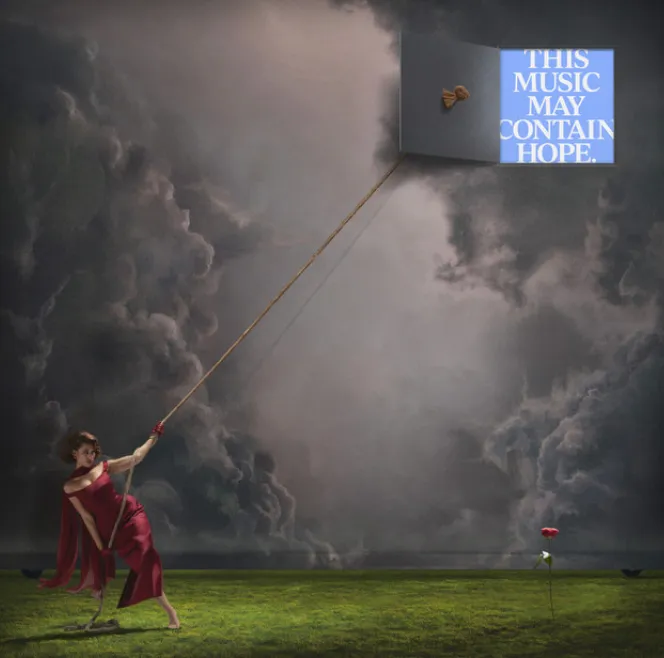
Grief has a strange way of changing your relationship with music. Songs that once felt ordinary can suddenly become unbearable, while something you never expected to move you can become a lifeline. Music can meet you in places words can't quite reach.
That is part of what makes this album so special.
RAYE doesn't pretend that everything is going to be okay. Instead, she takes us through the messy, complicated terrain of what it means to hurt, to struggle silently, to need other people, and eventually to believe that happier days might still be ahead.
One of the album's most stunning examples is "Click Clack Symphony."
I'll admit, the moment I saw Hans Zimmer's name attached to the track, I was intrigued. Zimmer's music has become the soundtrack to an entire generation of pop culture moments, from Interstellar to The Dark Knight to Pirates of the Caribbean. But what makes this collaboration so brilliant is the way the music itself becomes part of the song's message.
"Click Clack Symphony" is a celebration of female friendship and empowerment, but it is also an invitation to pay attention to the women around us. Check on your girls. Check on them when they're struggling, and check on them when they seem perfectly fine.
The song understands something important about the way we carry one another: sometimes there are tears and clouds before we can see the sunshine again.
And then there are those strings.
Listen to them with the music video playing and try not to feel like you're running through an open field. The whole thing makes you want to throw your arms open and fly.
For me, that connection between music, community, and joy carries particular weight as a Black woman. Black joy has always been about more than simply feeling good. There is a particular power in dancing, singing, laughing, creating, gathering, and choosing delight in a world that doesn't always make space for it. Joy can be communal. Joy can be defiant. And sometimes joy is simply the reminder that we are still here.
RAYE understands that.
And then, almost immediately, she follows "Click Clack Symphony" with "I Know You're Hurting."
The contrast is heartbreaking.
The song feels like a hand reaching through the darkness and saying, I see you.
It speaks to the silent struggle of dealing with our own mess, allowing ourselves to spiral, and convincing ourselves that we have to carry everything alone. Sometimes we don't need someone to fix us. Sometimes we just need someone willing to carry the load with us.
RAYE does exactly that.
That is what makes the progression of this album so effective. It begins in cries of despair and moves, slowly and imperfectly, toward renewed hope. Nothing has necessarily been fixed. The problems haven't magically disappeared. But somewhere along the way, the listener begins to believe that there might still be happier times ahead.
And perhaps that's the most honest kind of hope.
Not the promise that everything will be fine.
The possibility that everything won't always feel like this.
By the end of the album, RAYE even gives us a whimsical invitation to start the whole thing over if the music hasn't managed to inspire some hope in us.
And then she lists every single credit in the final track.
Every. Single. Credit.
Iconic.
It's funny, but it also feels strangely fitting. After spending an entire album reminding us that none of us gets through life entirely alone, she ends by naming the people who helped make the music possible.
Because that's what this album ultimately feels like to me: an argument for the power of being carried.
By music.
By friendship.
By community.
By the people who check on us when we're hurting and celebrate with us when we're not.
And sometimes, by a song that gives us just enough light to believe that the clouds won't last forever.
Sometimes joy is how we remember that we're still here.
Sometimes hope sounds like an orchestra.
And sometimes, you just need to turn the music up and dance.